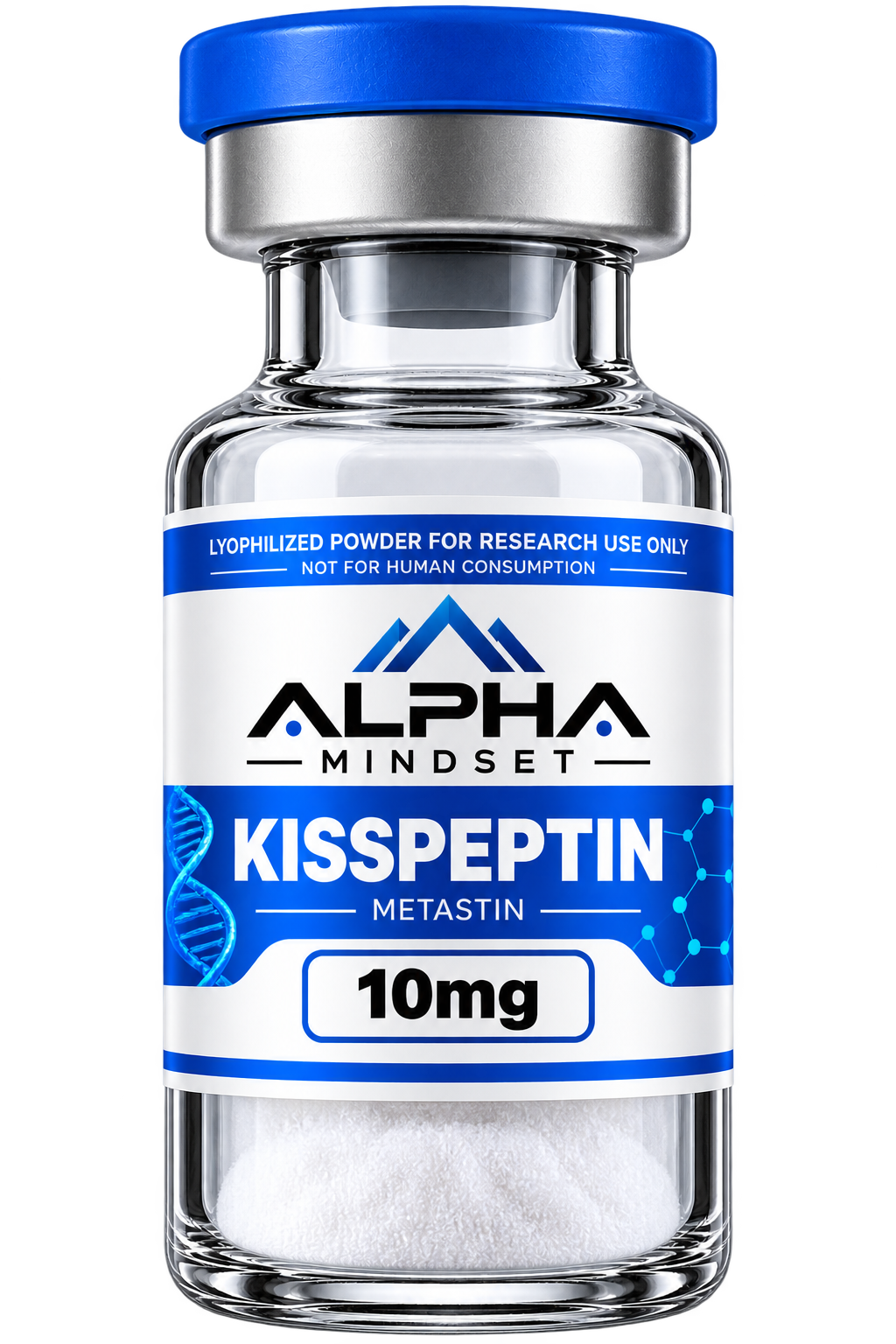
Kisspeptin is a naturally occurring family of peptide hormones encoded by the KISS1 gene. It is considered one of the major upstream regulators of the hypothalamic-pituitary-gonadal (HPG) axis, the hormonal system responsible for reproductive function and sex-hormone signalling.
Kisspeptin activates the KISS1 receptor (KISS1R/GPR54), which stimulates hypothalamic gonadotropin-releasing hormone (GnRH). GnRH subsequently stimulates the pituitary to release luteinizing hormone (LH) and follicle-stimulating hormone (FSH).
Key Research Areas
Reproductive Hormone Signalling
Kisspeptin is extensively researched as a central regulator of reproductive endocrinology. Its activation of GnRH neurons can subsequently increase LH and FSH secretion, making the peptide particularly important for studying the HPG axis.
LH & FSH Research
Human studies have demonstrated that kisspeptin administration can stimulate circulating LH and FSH, although the magnitude of the response varies according to biological and hormonal conditions.
Testosterone & Male Reproductive Research
Because LH stimulates Leydig cells within the testes, kisspeptin-induced activation of the reproductive axis has been investigated in relation to endogenous testosterone signalling and male reproductive physiology. Human research has demonstrated increases in LH and, under some experimental conditions, testosterone following kisspeptin administration.
Female Fertility & Ovulation Research
Kisspeptin plays an important physiological role in the hormonal processes controlling follicular development, the LH surge and ovulation. This has generated considerable interest in kisspeptin for reproductive and assisted-fertility research.
Puberty & Sexual Development
The KISS1/KISS1R pathway is a critical regulator of puberty. Loss-of-function mutations affecting this signalling pathway can result in hypogonadotropic hypogonadism and failure of normal sexual maturation, demonstrating how important kisspeptin signalling is to reproductive development.
Fertility Research
Researchers are investigating kisspeptin as a potential method of manipulating reproductive hormone signalling in certain fertility settings. Early human studies have demonstrated stimulation of reproductive hormones in healthy individuals and some people with reproductive disorders.
How Kisspeptin Works
The simplified hormonal pathway is:
Kisspeptin → KISS1R/GPR54 → GnRH → LH & FSH → Gonadal Hormone Signalling
Rather than directly supplying testosterone, estrogen, LH or FSH, kisspeptin acts considerably further upstream within the reproductive endocrine system.
This makes it particularly interesting for research into the body’s natural regulation of:
- GnRH secretion
- LH and FSH production
- Testosterone signalling
- Estrogen signalling
- Ovulation
- Spermatogenesis
- Puberty
- Fertility and reproductive function