ORDERS PLACED TODAY MAY STILL SHIP TODAY
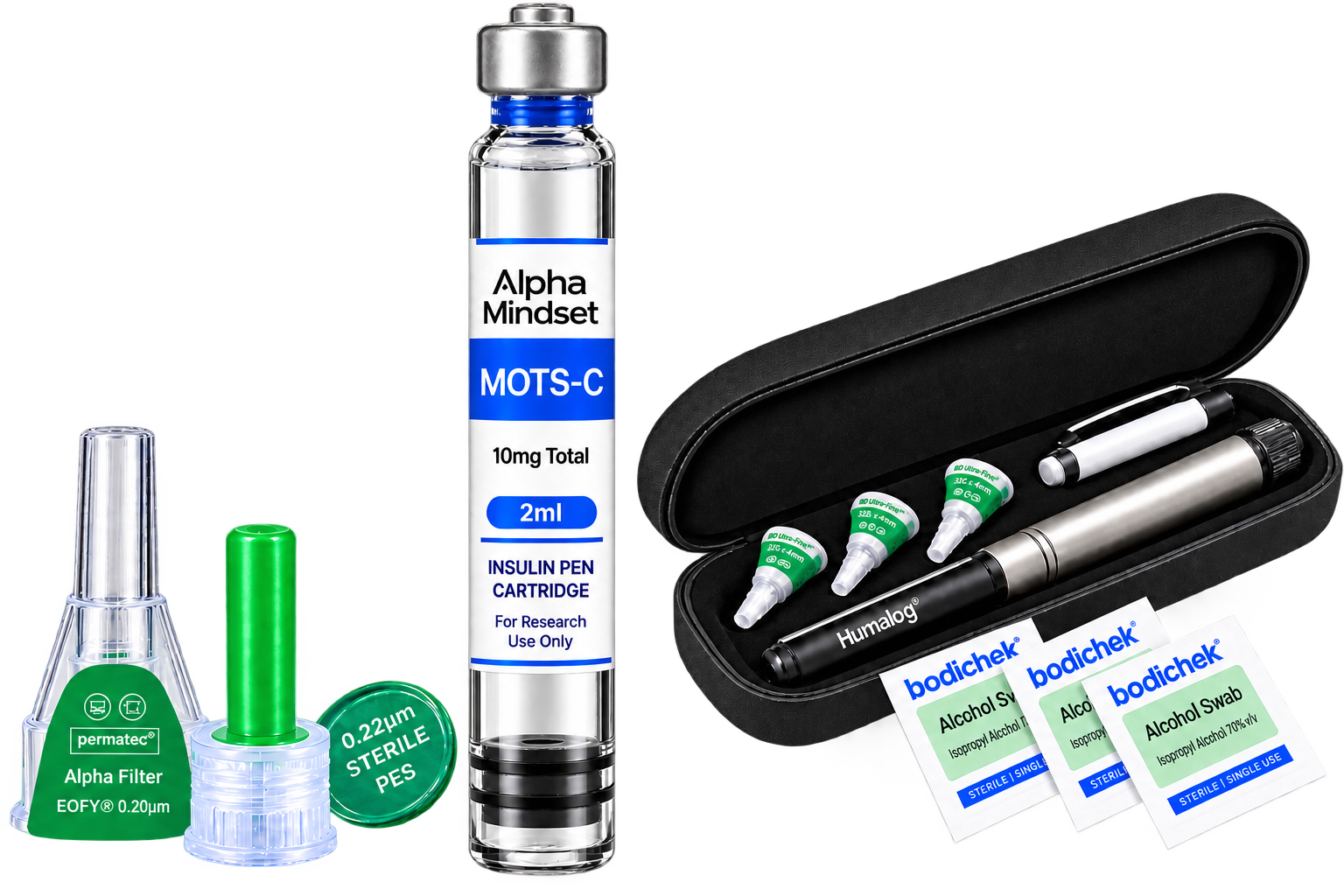
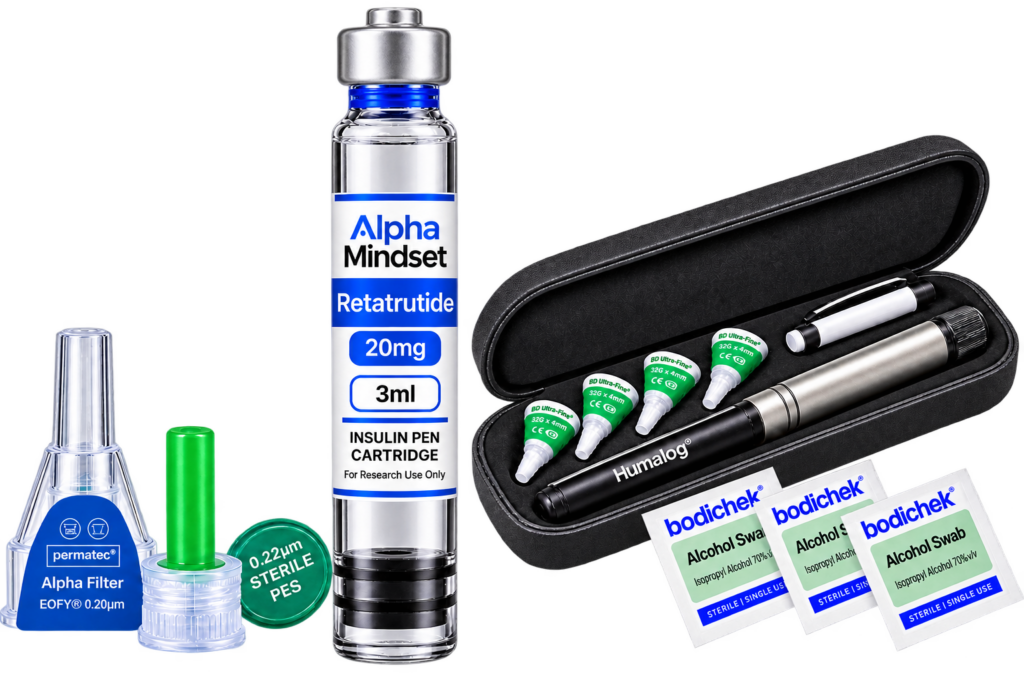
MOTS-C 10mg With EpiPen

$100,00

MOTS-c (Mitochondrial Open Reading Frame of the 12S rRNA Type-c) is a naturally occurring 16-amino-acid mitochondrial-derived peptide (MDP) encoded within mitochondrial DNA.

Unlike most peptides, which are encoded by nuclear DNA, MOTS-c originates from a small open-reading frame within the mitochondrial 12S rRNA (MT-RNR1) region. This unusual origin has made MOTS-c an important research target in the fields of mitochondrial signalling, cellular energy metabolism, insulin sensitivity, exercise physiology and ageing.

Key Research Areas

Mitochondrial & Cellular Energy Research
MOTS-c is being investigated as a signalling molecule that allows mitochondria to communicate with the rest of the cell. Under metabolic stress, MOTS-c can translocate to the nucleus and influence expression of genes associated with metabolic adaptation and cellular stress resistance.

Glucose Metabolism & Insulin Sensitivity
Some of the strongest early MOTS-c research involves glucose metabolism. Experimental studies found that MOTS-c increased cellular glucose utilisation and improved skeletal-muscle insulin sensitivity in mice. It also protected mice against high-fat-diet-induced insulin resistance and excessive weight gain.

AMPK & Metabolic Signalling
A major focus of MOTS-c research is AMP-activated protein kinase (AMPK), one of the body’s primary cellular energy sensors.

Research indicates that MOTS-c influences the folate cycle and purine biosynthesis, increasing AICAR and subsequently activating AMPK.

Exercise & Performance Research
MOTS-c has generated considerable interest in exercise physiology. Animal research has demonstrated improvements in exercise capacity and metabolic adaptation following MOTS-c treatment.

Human studies have also investigated how naturally occurring MOTS-c responds to exercise. Research indicates that acute exercise can alter mitochondrial-derived peptide concentrations, although responses vary with exercise type and other factors.

Skeletal Muscle Research
Skeletal muscle appears to be an important target of MOTS-c signalling. Experimental research has investigated its effects on glucose uptake, GLUT4 expression, AMPK activation, insulin sensitivity and muscle metabolic function.

Metabolic & Body-Composition Research
MOTS-c has been studied in animal models involving obesity, insulin resistance and metabolic dysfunction. Early experiments demonstrated protection against diet-induced obesity and improvements in metabolic homeostasis. These findings are predominantly preclinical and should not be interpreted as evidence that MOTS-c is an established human weight-loss treatment.

Ageing & Longevity Research
MOTS-c is also being investigated in the biology of ageing. Research has explored age-associated changes in MOTS-c signalling and its potential involvement in metabolic resilience, mitochondrial function, muscle performance and cellular stress responses.

How MOTS-c Is Being Studied

One proposed pathway is:

MOTS-c → Folate/Purine Metabolism → AICAR → AMPK Activation → Metabolic & Cellular Adaptation

During cellular stress, MOTS-c can also move into the nucleus, where research indicates that it interacts with transcription factors including NRF2 and influences genes containing antioxidant response elements.

Research surrounding MOTS-c therefore includes:

  • Mitochondrial-to-nuclear signalling
  • AMPK activation
  • Glucose utilisation
  • Insulin sensitivity
  • Skeletal-muscle metabolism
  • Exercise adaptation
  • Cellular stress resistance
  • Oxidative-stress pathways
  • Metabolic ageing

MOTS-c targets skeletal muscle and can enhance glucose metabolism. Therefore, MOTS-c plays an important role in the regulation of cardiovascular, diabetes, exercise and longevity. It is a new mitochondrial signaling mechanism and plays a role in regulating intracellular and intercellular metabolism is a 16 amino acid peptide that is coded by the mitochondrial genome. The mitochondria are the “power generators” in cells that convert chemical energy from food into a form that cells can use.

Two other mitochondrial-derived peptides (MDPs) have also been discovered so far, humanin and SHLP1-6, but their possible involvement in human performance enhancement is unknown. According to new research, mitochondrial-derived peptides such as MOTS-c have a role in maintaining mitochondrial function and protecting cells under different stresses1.  It has been shown that exercise causes MOTS-c levels to go up in humans. Furthermore, it has been shown in mice that MOTS-c treatment improves physical performance in mice of all ages and seems to regulate skeletal muscle metabolism and gene expression1.

Are there medical uses for MOTS-c? No, MOTS-c is still an experimental peptide being explored for therapeutic purposes related to aging and obesity. It is not approved by the Food and Drug Administration (FDA) for use in humans. The FDA has also clarified that it is one among many peptides or drugs that are unlawful to use in making compounded medications2.

This means that compounding pharmacies (special pharmacies that can custom mix medications) are not supposed to make medications with MOTS-c. Is MOTs-c prohibited in sport? Yes, MOTS-c is prohibited at all times under Section 4.4 Metabolic Modulators, 4.4.1. Activators of the AMP-activated protein kinase (AMPK) on the World Anti-Doping Agency Prohibited List.

Can athletes get a Therapeutic Use Exemption (TUE) for MOTS-c? No, athletes cannot get a TUE for MOTS-c because there is no approved therapeutic use for this experimental drug. Is MOTS-c used in dietary supplements? No, MOTS-c is not a legitimate dietary ingredient and cannot legally be used in dietary supplements.   Is MOTS-c safe to use?

Currently it is unknown under what conditions (if any) it is safe to use MOTS-c because there are no completed clinical trials. However, among people who claim to purchase MOTS-c online, there are many reported side effects, including increased heart rate or heart palpitations, injection site irritation, insomnia, and fever. There is also no data available on what happens with long-term use of MOTS-c.

About:

Research Use Only: Not for human or veterinary use.

LAB TESTED

99% PURITY

AUSTRALIA-WIDE

FAST DELIVERY

SECURE CHECKOUT

SSL ENCRYPTED

RESEARCH USE

NOT FOR HUMAN USE

RECOVERY SUPPORT

Research pathways for tissue repair

PERFORMANCE OPTIMISATION

Supports training and output

HIGH PURITY

Lab tested a 99% purity

RESEARCH GRADE

For laboratory research only

Best COMBINED WITH

FREQUENTLY ASKED QUESTIONS

Express Shipping

Tracking Number

DISCREET PACKAGING

100% private delivery

SECURE CHECKOUT

SSL encrypted

SATISFACTION GUARANTEE

We stand by our products