$95,00
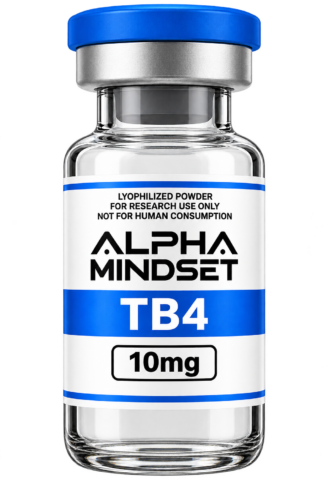
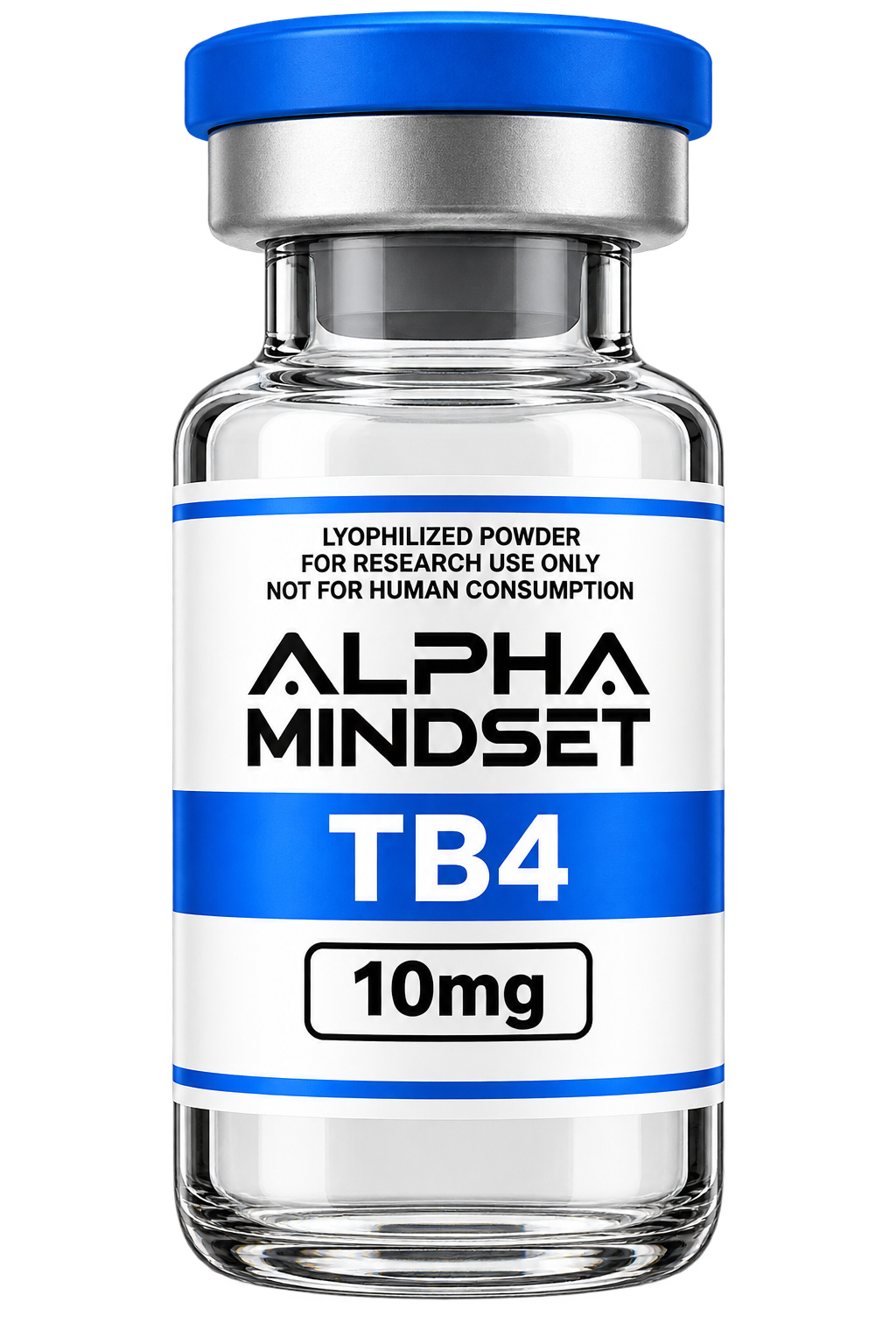
TB4 (Thymosin Beta-4 / Tβ4) is a naturally occurring 43-amino-acid peptide found throughout the body. It’s involved in tissue repair, cell migration, inflammation control and wound healing. It’s particularly interesting as a recovery peptide because there’s actually some human research on full-length TB4—not just animal work.
Its major biological actions include promoting cell migration and angiogenesis, supporting collagen/tissue remodeling, reducing inflammatory signaling and apoptosis, and potentially reducing fibrosis/scarring. In animal injury models it has accelerated skin repair and increased collagen deposition and blood-vessel formation.
That makes it potentially interesting for wound healing and soft-tissue recovery. You’ll also see it discussed for muscle, tendon and ligament recovery, but the human evidence there is considerably weaker than the wound-healing literature.
These names frequently get treated as interchangeable online, but they shouldn’t be.
TB4 = full-length 43-amino-acid thymosin beta-4.
TB-500 = a synthetic fragment/derivative associated with TB4, and products sold under the TB-500 name aren’t necessarily chemically consistent. The FDA’s recent review describes TB-500 as a seven-amino-acid synthetic fragment corresponding to residues 17–23 of TB4, while also noting that different salts and derivatives have been marketed under the same TB-500 name.

TB4 plays a key role in:
Actin regulation (helps cells move and repair tissue)
Wound healing
Reducing inflammation
Promoting blood vessel formation (angiogenesis)
Supporting muscle and tendon repair
It works by binding to actin and influencing cellular movement and regeneration.
TB4 has been studied in research settings for:
Muscle injuries
Tendon and ligament damage
Cardiac repair after heart injury
Corneal healing
Inflammatory conditions
It is sometimes confused with TB-500, which is a synthetic fragment derived from TB4 (usually the active region).
For in-vitro laboratory research use only. Not for human use.
For tendon, ligament, or muscle injury:
2–2.5 mg twice weekly
Total 4–5 mg per week
Duration: 4–6 weeks
By purchasing this material, the buyer acknowledges they are a qualified professional or acting on behalf of a licensed research facility. The buyer assumes full responsibility for the safe handling, storage, and use of this compound solely within controlled laboratory environments. No claims are made regarding safety or effectiveness outside of in-vitro research applications.
About: Actin‑binding peptide fragment researched for tissue repair, mobility recovery, and inflammation modulation.
Research Use Only: Not for human or veterinary use.

99% PURITY

FAST DELIVERY

SSL ENCRYPTED

NOT FOR HUMAN USE

Research pathways for tissue repair

Supports training and output

Lab tested a 99% purity

For laboratory research only
Tracking Number
100% private delivery
SSL encrypted
We stand by our products