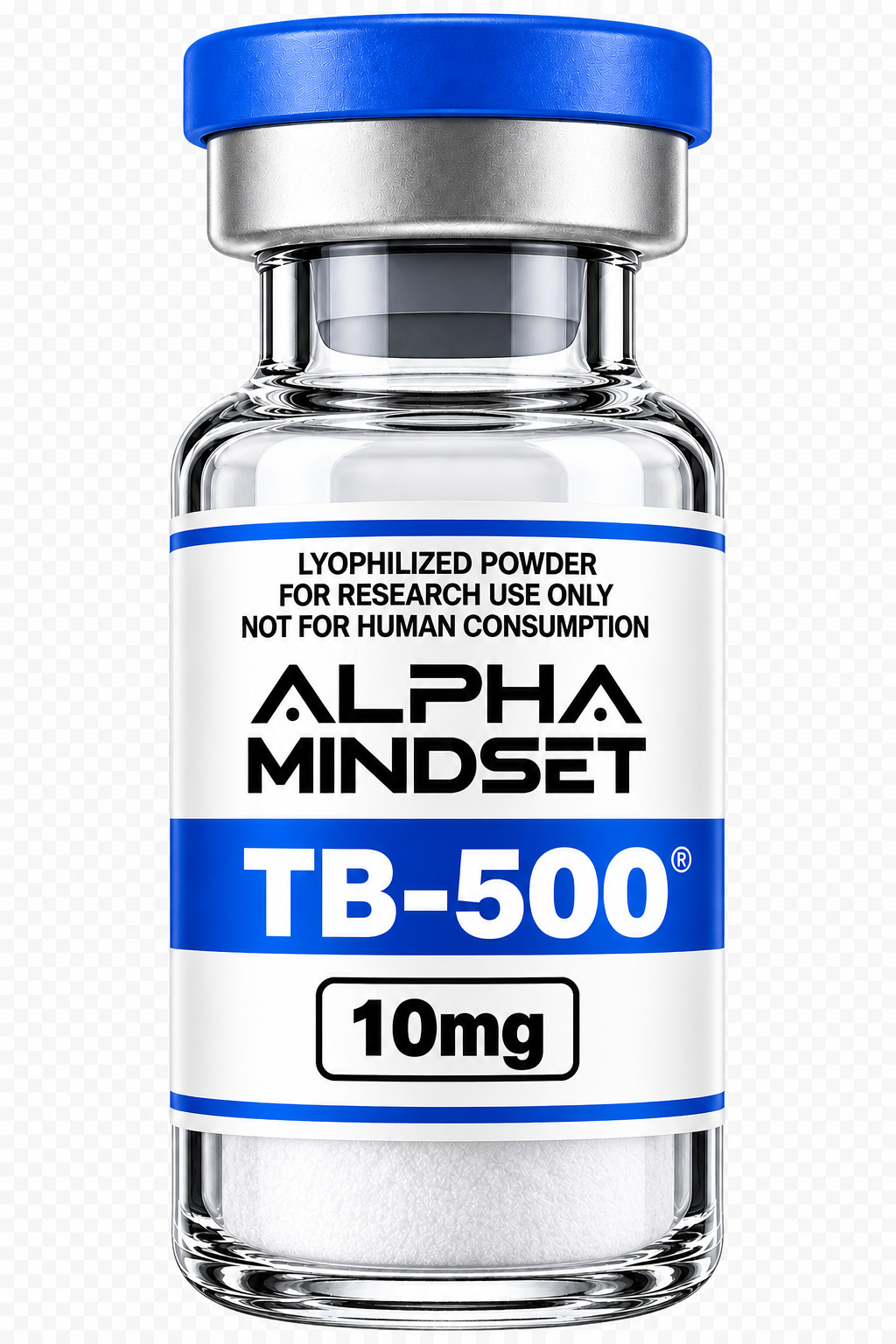
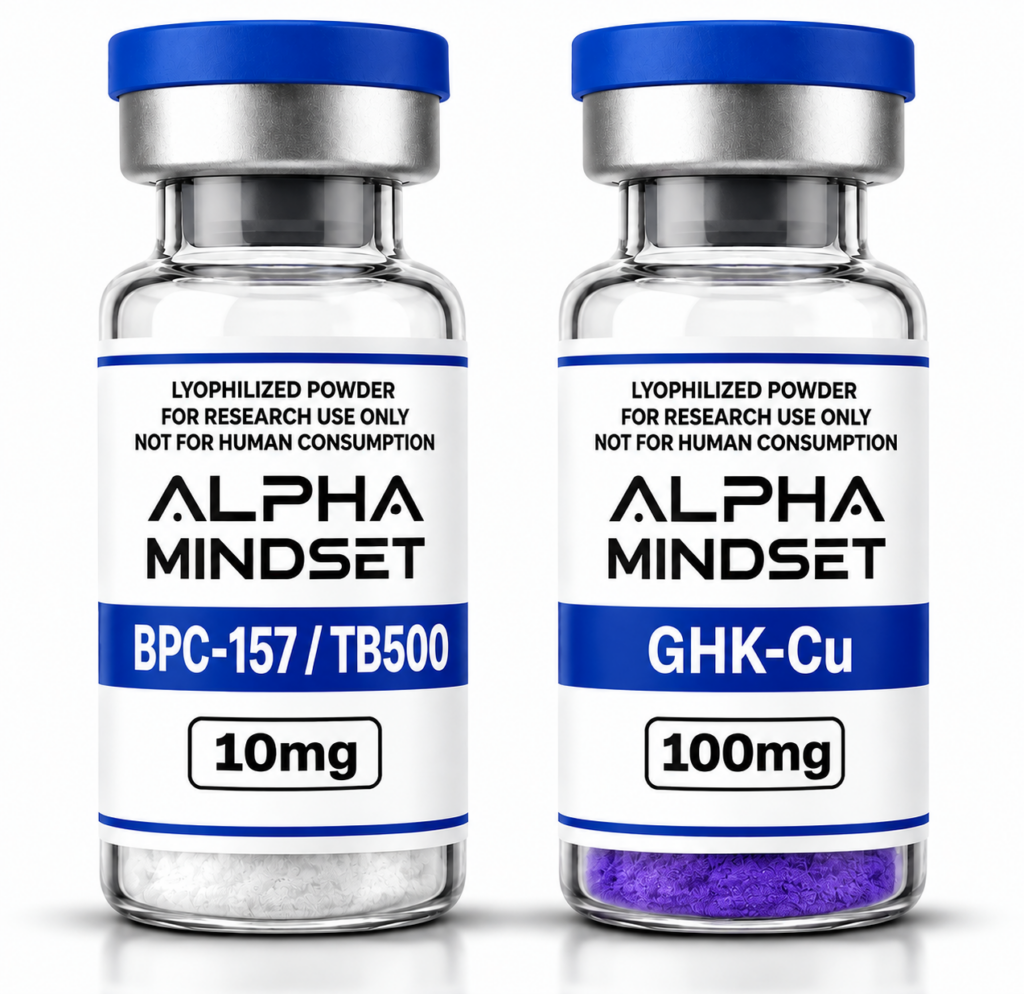
TB-500 10mg – Research Grade
TB‑500 is a synthetic peptide fragment corresponding to the active region of thymosin beta‑4 (Tβ4), a naturally occurring 43‑amino‑acid protein involved in tissue repair and regeneration[1][2]. This educational protocol presents a once‑daily subcutaneous approach using a practical dilution for accurate insulin‑syringe measurements in research settings.
Purity: ≥ 99% (HPLC)
Form: Lyophilised powder
Contents: TB-500 – 10mg
Storage: Store at −20°C. Avoid repeated freeze–thaw cycles.
Description
TB‑500 represents the N‑terminal active fragment of thymosin beta‑4, specifically the heptapeptide sequence Ac‑LKKTETQ[1][2]. This region is responsible for the actin‑binding and cell‑migration properties of the full thymosin molecule. Preclinical studies demonstrate that TB‑500 promotes angiogenesis, accelerates wound healing, and supports tissue regeneration by upregulating cell motility and blood vessel formation[5][6]. Research in animal models shows enhanced collagen deposition and reduced healing time in injury sites treated with thymosin fragments[11]. Recent metabolic studies suggest TB‑500 may act as a prodrug, cleaving to an active pentapeptide metabolite that drives biological activity[12].
Potential Benefits and Side Effects.
- Supports accelerated wound healing and tissue repair through enhanced angiogenesis and cell migration[5][6].
- May reduce inflammation and fibrosis indirectly via thymosin pathways observed in animal models[11].
- Generally well tolerated in veterinary studies; occasional mild injection‑site reactions (redness, tenderness) reported.
- Human safety data is limited; no large‑scale clinical trials have been completed for TB‑500 specifically[13].
For in-vitro laboratory research use only. Not for human use.
Why Choose TB-500 from AlphaMindset?
✅ Single-compound peptide: TB-500 (10mg)
✅ COA-verified, ≥ 99% purity (HPLC)
✅ Supplied as stable lyophilised powder
✅ Fast, secure domestic shipping Australia-wide
Dosage
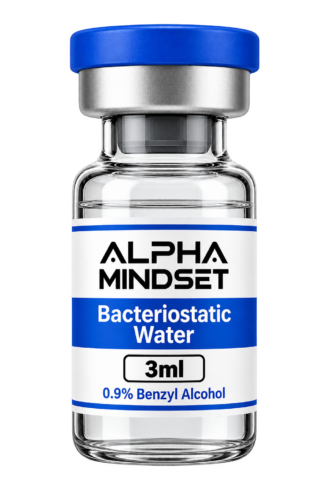
- Reconstitute: Add 3.0 mL bacteriostatic water → ~3.33 mg/mL concentration.
- Typical daily range: 500–1000 mcg once daily (gradual titration recommended).
- Easy measuring: At 3.33 mg/mL, 1 unit = 0.01 mL ≈ 33.3 mcg on a U‑100 insulin syringe.
- Storage: Lyophilized: store at −20 °C (−4 °F); after reconstitution, refrigerate at 2–8 °C (35.6–46.4 °F); do not freeze reconstituted solution.
Product Disclaimer
By purchasing this material, the buyer acknowledges they are a qualified professional or acting on behalf of a licensed research facility. The buyer assumes full responsibility for the safe handling, storage, and use of this compound solely within controlled laboratory environments. No claims are made regarding safety or effectiveness outside of in-vitro research applications.
About: Actin‑binding peptide fragment researched for tissue repair, mobility recovery, and inflammation modulation.
Research Use Only: Not for human or veterinary use.
Source: https://peptidedosages.com/single-peptide-dosages/tb-500-10mg-vial-dosage-protocol/